Fatty Liver Disease: Causes, Symptoms and Effective Treatment
Fatty liver disease is becoming increasingly common due to unhealthy lifestyles, poor dietary habits, and rising obesity levels. This condition occurs when excess fat accumulates in liver cells, which can affect the liver’s ability to function properly.
If left untreated, this liver condition can progress to serious complications such as liver inflammation, fibrosis, or cirrhosis. However, with early diagnosis and the right lifestyle changes, fatty liver disease can often be reversed.
In this article, we will discuss fatty liver disease, its causes, symptoms, diagnosis, and effective treatment options to help you understand how to protect your liver health.
What is Fatty Liver Disease?
Fatty liver disease is a condition in which excess fat builds up in the liver. Normally, the liver contains a small amount of fat, but when fat accounts for more than 5–10% of the liver’s weight, it is considered abnormal fat accumulation.
There are two main types of this condition:
Non-Alcoholic Fatty Liver Disease (NAFLD)
This type occurs in people who drink little or no alcohol. It is strongly associated with:
- Obesity
- Type 2 diabetes
- High cholesterol
- Metabolic syndrome
- Insulin resistance
NAFLD is currently one of the most common liver disorders worldwide.
Alcoholic Fatty Liver Disease (AFLD)
Alcoholic fatty liver disease develops due to excessive alcohol consumption, which damages liver cells and causes fat accumulation in the organ.
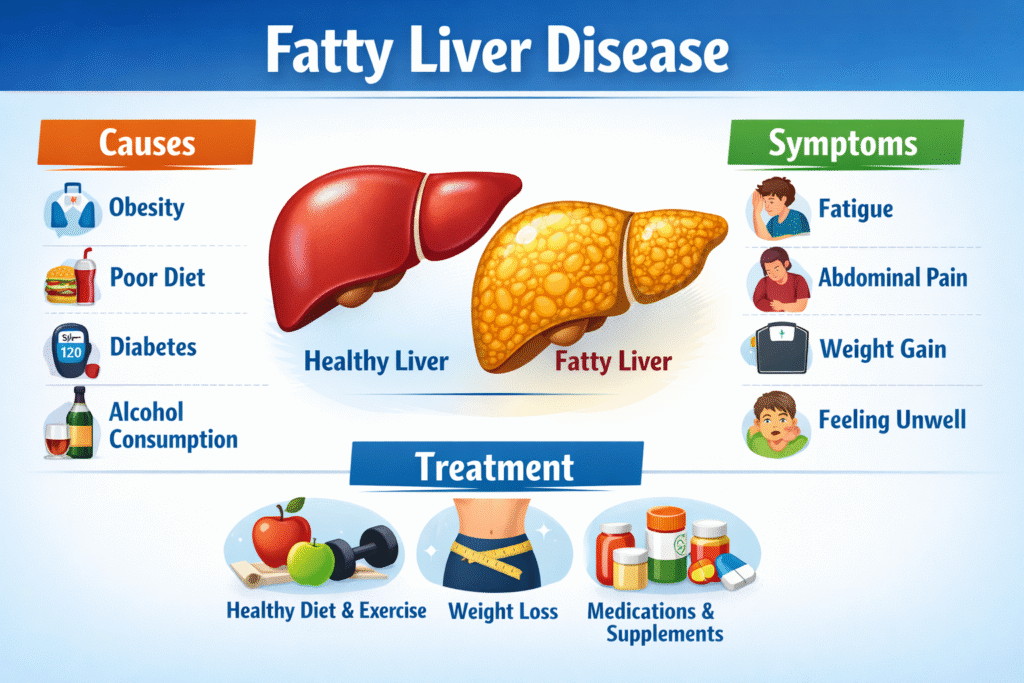
Causes of Fatty Liver Disease
Several lifestyle and medical factors can contribute to the development of this condition.
Unhealthy Diet
Diets high in sugar, refined carbohydrates, processed foods, and fried foods can increase fat buildup in the liver.
Obesity
Being overweight or obese significantly increases the risk of developing liver disease.
Diabetes and Insulin Resistance
People with type 2 diabetes are more likely to develop fat buildup in the liver due to insulin resistance.
High Cholesterol
Elevated levels of cholesterol and triglycerides can contribute to excess fat storage in the liver.
Excess Alcohol Consumption
Alcohol interferes with fat metabolism and can damage liver cells.
Lack of Physical Activity
A sedentary lifestyle contributes to weight gain and increased fat storage in the body.
Symptoms of Fatty Liver Disease
Many people with fatty liver disease do not experience noticeable symptoms in the early stages.
However, some individuals may experience:
- Fatigue
- Discomfort or pain in the upper right abdomen
- Weakness
- Loss of appetite
- Mild weight loss
Symptoms in Advanced Stages
If the condition progresses, symptoms may include:
- Yellowing of the skin and eyes (jaundice)
- Abdominal swelling
- Severe fatigue
- Mental confusion in severe liver damage
Early detection is important to prevent complications.
Diagnosis of Fatty Liver Disease
Doctors may diagnose fatty liver disease using several medical tests, including:
- Blood tests to evaluate liver enzymes
- Ultrasound imaging to detect fat accumulation in the liver
- CT scan or MRI for detailed liver imaging
- Liver biopsy in severe or unclear cases
Early diagnosis can help prevent further liver damage.
Effective Treatment for Fatty Liver Disease
There is currently no specific medication that completely cures fatty liver disease, but it can often be managed and even reversed through healthy lifestyle changes.
Maintain a Healthy Weight with Balanced Diet
Losing 5–10% of body weight can significantly reduce fat in the liver.
A liver-friendly diet should include:
- Fruits and vegetables
- Whole grains
- Lean protein
- Healthy fats
Avoid:
- Sugary beverages
- Processed foods
- Deep-fried foods
- Excess refined carbohydrates
Exercise Regularly
Engaging in 30–45 minutes of physical activity daily helps reduce liver fat and improve metabolism.
Activities like walking, cycling, yoga, or swimming can be beneficial.
Avoid Alcohol
Limiting or avoiding alcohol is essential for individuals diagnosed with liver disease.
Manage Diabetes and Cholesterol
Keeping blood sugar and cholesterol levels under control can prevent the condition from worsening.
Ayurvedic and Natural Support
Certain Ayurvedic herbs are traditionally believed to support liver health, including:
- Kutki
- Bhumyamalaki
- Kalmegh
- Aloe vera
These herbs may help improve liver function and support natural detoxification.
Frequently Asked Questions
What is the main cause of fatty liver disease?
The most common cause is an unhealthy lifestyle, including poor diet, obesity, diabetes, and lack of physical activity. Excess alcohol consumption can also damage the liver and cause fat accumulation.
Can fatty liver disease be reversed?
Yes, fatty liver disease can often be reversed in the early stages through weight loss, a healthy diet, regular exercise, and avoiding alcohol.
Is fatty liver disease dangerous?
In early stages, it may not cause serious problems. However, if untreated, it can progress to liver inflammation, fibrosis, cirrhosis, or liver failure.
What foods should be avoided in this condition?
People with this condition should avoid:
- Sugary drinks
- Processed foods
- Fried foods
- Refined carbohydrates
- Excess alcohol
Which foods support liver health?
Foods that support liver health include:
- Leafy green vegetables
- Fruits
- Whole grains
- Nuts and seeds
- Fish rich in omega-3 fatty acids
How long does it take to improve liver health?
The time required depends on lifestyle changes. Many people notice improvement within 3–6 months after adopting healthy habits.
Conclusion
Fatty liver disease is a growing health concern, but it is largely preventable and manageable. With early diagnosis and simple lifestyle changes such as a balanced diet, regular exercise, and weight management, many people can successfully reverse liver disease.
Taking proactive steps today can protect your liver and support long-term health.