
Blog
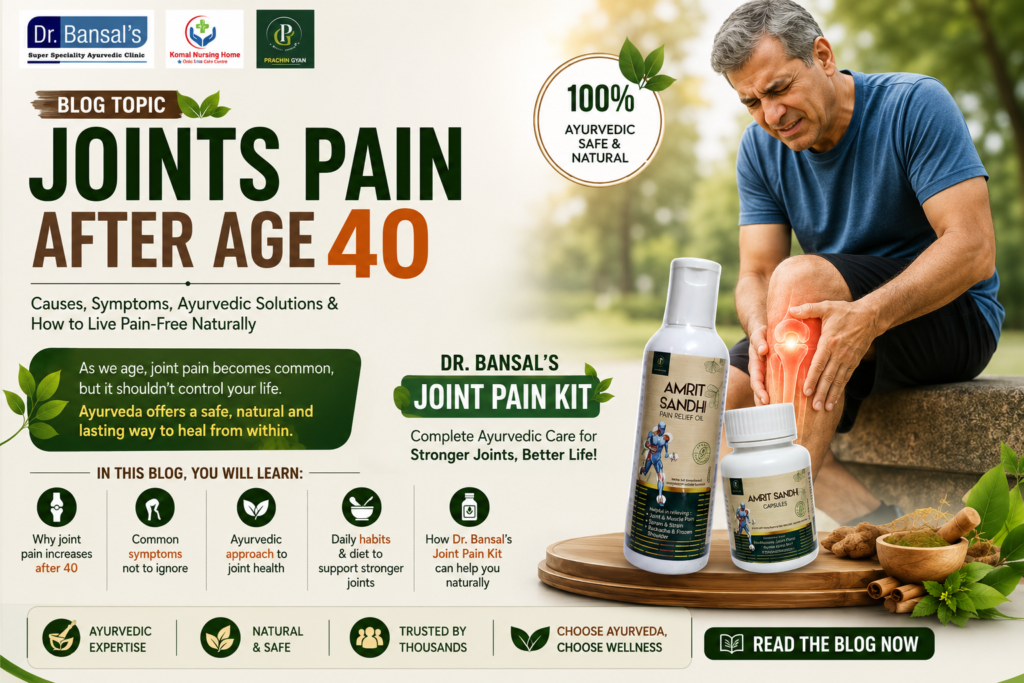
Joint Pain Treatment After 40: Common Causes and Ayurvedic Tips for Better Joint Health
Turning 40 often brings a quiet shift in how the body feels. You climb the same stairs you always have, but your knees complain a little louder. You get up from a chair and your back takes a second to agree. As an Ayurvedic doctor, I meet this story every week in my clinic, and I want to walk you through why it happens and what genuinely helps.
Why Joints Start Talking Back After 40
Ayurveda links most joint discomfort after midlife to an aggravated Vata dosha. Vata governs movement, and once it rises beyond balance, it dries out the tissues that cushion your joints. That dryness shows up as stiffness, cracking sounds, and a nagging ache that worsens in cold weather or after long periods of rest.
Several everyday factors accelerate this imbalance:
- Slower digestion (Agni): Metabolism naturally cools down with age. Weak digestion produces Ama, a toxic residue that settles in the joints and fuels inflammation.
- Reduced physical activity: Desk jobs and long commutes keep the joints still for hours, and stagnant joints stiffen faster than active ones.
- Cartilage wear: Repeated use over decades thins the natural cushioning around the knees, hips, and spine.
- Excess body weight: Every extra kilogram adds real pressure to weight-bearing joints, especially the knees.
- Calcium and Vitamin D gaps: Limited sun exposure and low-nutrient diets weaken bone density over time.
- Old injuries: A sprain from your twenties can resurface as chronic stiffness once Vata increases.
- Chronic stress: Elevated stress hormones tighten muscles around the joints and disturb sleep, which slows the body’s natural repair process.
Ayurveda groups these conditions under terms like Sandhivata (osteoarthritis-type joint degeneration) and Amavata (inflammatory joint pain linked to toxin buildup). Understanding the root cause matters, because it shapes the entire approach to joint pain treatment rather than just masking the symptom.
Ayurvedic Joint Pain Treatment: Where to Start
Effective joint pain treatment in Ayurveda rarely relies on a single remedy. It combines herbs, diet, and daily routine to restore balance from within.
Herbal support
Ashwagandha strengthens muscle tissue and calms stress-related inflammation. Guggulu, especially in classical formulations like Yograj Guggulu, helps clear Ama and eases stiffness. Shallaki (Boswellia) supports flexibility, and turmeric with a pinch of black pepper works as a gentle daily anti-inflammatory.
Warm oil therapies
Abhyanga, a full-body massage with warm sesame or Mahanarayan oil, improves circulation and lubricates dry joints. For knee-specific pain, practitioners often recommend Janu Basti, where warm medicated oil rests around the knee using a dam of dough. Many patients notice reduced stiffness after a few consistent sessions.
Diet correction
Favor warm, freshly cooked meals with ghee, whole grains, and cooked vegetables. Limit cold, fried, and processed foods, since they aggravate Vata and slow digestion. Ginger tea before meals supports Agni and helps prevent Ama formation.
Gentle, consistent movement
Walking, swimming, and Vata-pacifying yoga poses like Tadasana and Bhujangasana keep joints mobile without overloading them. Movement matters more than intensity here — a short daily walk beats an occasional intense workout.
Sleep and stress management
Early sleep, oil massage on the scalp and feet, and simple breathing practices lower stress hormones and give joint tissues time to repair overnight.
What Results Look Like
Patients rarely experience overnight relief, and I never promise that. In the first two weeks, most people notice better relaxation and slightly less morning stiffness. By six weeks, flexibility and swelling typically improve. Over two to three months, pain control becomes more stable and daily movement feels easier. Consistency drives these results far more than any single herb or therapy.
When to See a Doctor Immediately
Ayurveda works best alongside proper diagnosis, not instead of it. Seek urgent medical evaluation if you notice sudden severe pain, joint swelling with fever, an inability to bear weight, or numbness in the limb. These signs point to conditions that need immediate clinical attention.
Final Word
Joint pain after 40 is common, but it isn’t something you simply have to accept. Ayurveda treats it as a signal that digestion, circulation, and lifestyle need attention — not just the joint itself. With the right herbs, warm therapies, mindful eating, and daily movement, most people regain comfort and confidence in how they move. The earlier you start, the smoother that journey tends to be.
This article is for educational purposes only and does not replace professional medical advice. Please consult a qualified Ayurvedic doctor before starting any treatment.
Frequently Asked Questions
- What is the best Ayurvedic joint pain treatment after 40?
A combination approach works best — herbs like Ashwagandha and Guggulu, warm oil therapies such as Abhyanga or Janu Basti, an anti-inflammatory diet, and regular gentle movement. The right combination depends on your specific imbalance and symptoms.
- Why does joint pain increase after the age of 40?
Digestion slows down, Vata dosha rises, cartilage naturally thins with use, and lifestyle factors like sitting for long hours or carrying extra weight add pressure on the joints. Ayurveda views this as a combined imbalance rather than a single cause.
- Can Ayurvedic treatment cure joint pain permanently?
Ayurveda does not promise an instant or permanent cure, especially for chronic conditions like osteoarthritis or rheumatoid arthritis. It focuses on reducing inflammation, improving mobility, and slowing further degeneration through consistent, long-term care.
- How long does Ayurvedic joint pain treatment take to show results?
Most people notice reduced stiffness within two to six weeks and more stable comfort by the second or third month. Results vary based on the severity of the condition and how consistently the treatment plan is followed.
- Are Ayurvedic remedies safe to combine with regular medication?
Many herbs and therapies work well alongside conventional treatment, but you should always inform both your Ayurvedic doctor and your physician about everything you are taking to avoid interactions.
- What foods should I avoid for better joint health after 40?
Limit cold, fried, and heavily processed foods, along with excess sugar and refrigerated leftovers. These foods aggravate Vata and slow digestion, which allows Ama to accumulate around the joints.