
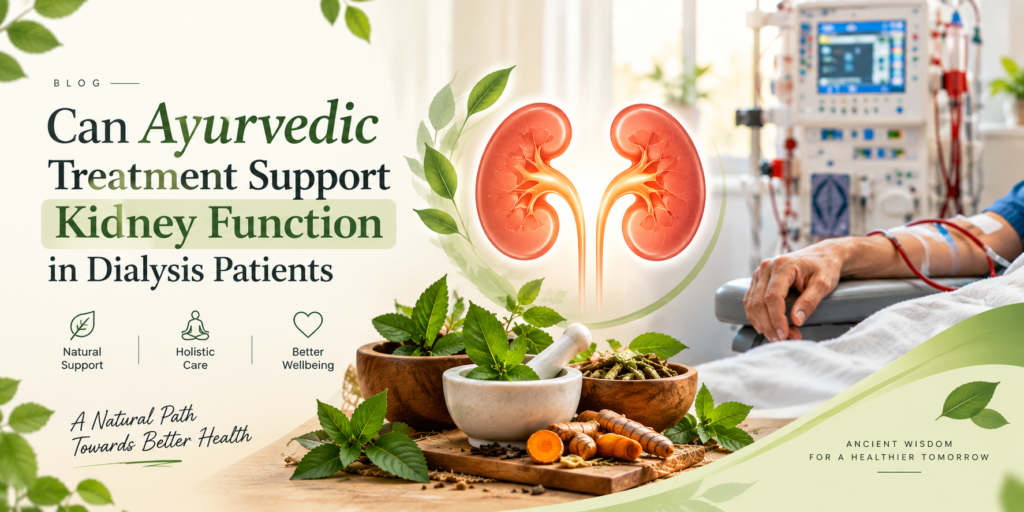
Can Ayurvedic Treatment Support Kidney Function in Dialysis Patients?
Patients on dialysis ask me this question often. They want to know if Ayurveda can ease their journey. As an Ayurvedic doctor, I understand this hope deeply. Kidney disease changes daily life completely, and patients look for anything that might bring relief.
Ayurvedic treatment for dialysis patients focuses on supportive care, not replacement therapy. Let me explain what this actually means, based on classical Ayurvedic principles and clinical observation.
Understanding Kidney Function Through an Ayurvedic Lens
Ayurveda views the kidneys as vital organs connected to Mutravaha Srotas, the body’s urinary channels. Classical texts describe kidney disorders under conditions like Mutrakrichra and advanced stages resembling Mutraghata. Imbalances in Vata dosha often relate to poor waste elimination and fluid regulation.
This framework doesn’t replace modern nephrology. It offers a complementary way to understand symptoms like fatigue, swelling, and poor appetite that dialysis patients experience regularly.
What Ayurvedic Treatment Can Realistically Offer
Managing Symptoms Alongside Dialysis
Dialysis patients often struggle with fatigue, nausea, and poor sleep. Ayurvedic approaches, including gentle herbal formulations and dietary adjustments, may help ease these symptoms when used alongside standard medical care. I always emphasize this point with my patients: Ayurveda supports comfort, not kidney recovery once dialysis becomes necessary.
Dietary Guidance Suited to Dialysis Restrictions
Ayurvedic dietetics pays close attention to Ahara (food) as medicine. For dialysis patients, this means working carefully within the potassium, phosphorus, and fluid restrictions their nephrologist has already prescribed. I coordinate closely with allopathic reports before suggesting any dietary modification. Ayurveda never overrides a nephrologist’s dietary chart; it works within it.
Herbal Support for Overall Wellness
Herbs like Punarnava, Gokshura, and Varun appear frequently in classical Ayurvedic texts related to urinary and kidney health. Some patients report better digestion and energy levels with carefully selected formulations. However, I always stress caution here. Many herbs affect potassium and electrolyte levels, which can be dangerous for dialysis patients. Self-medication with any Ayurvedic herb, without medical supervision, poses real risk.
Stress Reduction and Mental Wellbeing
Dialysis takes a toll mentally as much as physically. Ayurvedic practices like Pranayama (breathing exercises) and gentle yoga, adapted to a patient’s energy levels, can support emotional balance. Many patients find these practices calming during long dialysis sessions and recovery periods at home.
What Ayurveda Cannot Do for Dialysis Patients
I believe honesty matters more than false hope. Ayurvedic treatment cannot reverse kidney failure once a patient reaches end-stage renal disease. It cannot replace dialysis sessions. It cannot detoxify the blood the way dialysis machines do.
Some claims online suggest Ayurvedic herbs can “cure” kidney failure or eliminate the need for dialysis. As a practicing Ayurvedic doctor, I strongly caution against these claims. They are misleading and potentially dangerous. Stopping dialysis based on unverified herbal promises can lead to fatal complications.
How I Approach These Cases in Practice
When a dialysis patient consults me, I first ask for their complete nephrology reports. I never suggest herbs or formulations without understanding their current kidney function, electrolyte levels, and dialysis schedule. My role stays limited to supportive care: managing symptoms, supporting digestion, and improving quality of life alongside their primary treatment.
I also communicate directly with the patient’s nephrologist whenever possible. Integrated care produces better outcomes than isolated treatment approaches. This collaboration protects the patient from harmful herb-drug interactions.
Why Integration Matters More Than Substitution
Ayurvedic treatment for dialysis patients works best as a support system, not a substitute. Patients who combine both approaches, under proper medical supervision, often report better energy levels and emotional resilience. But the dialysis machine remains irreplaceable for filtering waste and excess fluid from the blood.
I tell every patient the same thing: Ayurveda can walk beside your dialysis treatment. It cannot walk instead of it.
Frequently Asked Questions
Q1: Can Ayurvedic treatment cure kidney failure and stop the need for dialysis?
No. Ayurvedic treatment cannot reverse end-stage kidney failure. Dialysis remains medically necessary once kidney function drops to that stage.
Q2: Are Ayurvedic herbs safe for dialysis patients?
Not automatically. Many herbs affect potassium and electrolyte levels. Any herbal use requires supervision from both an Ayurvedic doctor and the patient’s nephrologist.
Q3: Can Ayurveda help with dialysis side effects like fatigue and nausea?
Yes, supportive Ayurvedic care may help ease some symptoms when used alongside standard dialysis treatment, not as a replacement for it.
Q4: Should I inform my nephrologist if I start Ayurvedic treatment?
Yes, always. Full transparency between your Ayurvedic doctor and nephrologist prevents harmful interactions and ensures coordinated care.
Q5: Can diet alone, following Ayurvedic principles, replace dialysis restrictions?
No. Ayurvedic dietary guidance should work within your nephrologist’s existing restrictions, never replace them.
Q6: Is Ayurvedic treatment for dialysis patients scientifically proven?
Research remains limited compared to modern nephrology. Ayurvedic care should be viewed as complementary support, based on classical principles, not a scientifically validated cure.
Disclaimer
This blog is written for general informational and educational purposes only. It does not constitute medical advice, diagnosis, or treatment recommendations. Ayurvedic treatment should never replace dialysis or any prescribed nephrology care. Dialysis patients must consult their nephrologist before making any changes to their treatment, diet, or medication, and should inform their doctor before starting any Ayurvedic therapy. Individual results vary, and this content does not guarantee any specific outcome.