
Blog
Depression: Causes, Symptoms, Types & Natural Ways to Manage It — An Ayurvedic Perspective
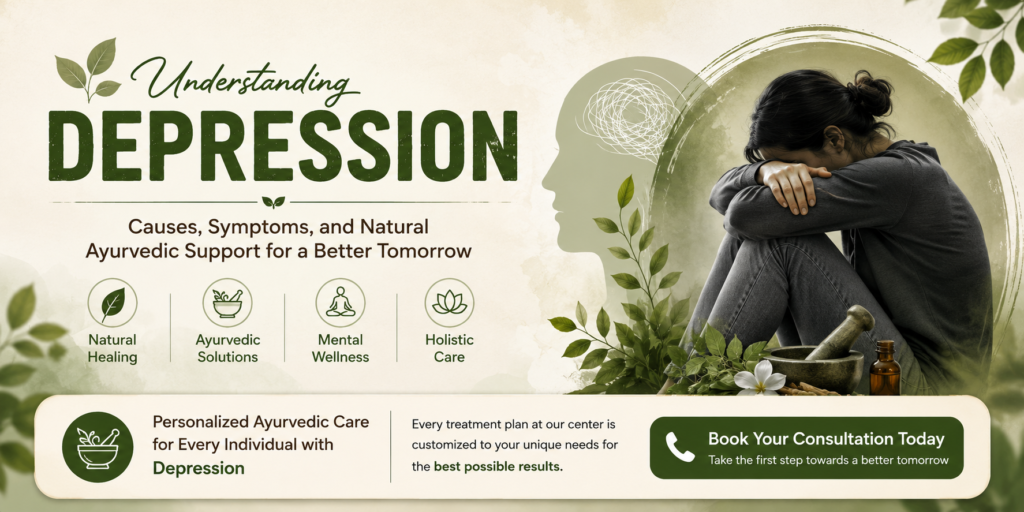
Depression affects millions of people worldwide. It touches mood, energy, sleep, and daily function. Modern medicine treats depression as a chemical imbalance. Ayurveda sees it differently. Ayurveda calls this condition Vishada and links it to an imbalance of the doshas, especially Vata and Kapha. Understanding depression symptoms early helps people seek the right support sooner.
This blog explores depression through an Ayurvedic lens. It covers causes, symptoms, types, and natural management strategies rooted in ancient wisdom.
What Is Depression?
Depression is more than sadness. It is a persistent mental state that affects thoughts, emotions, and behavior. Ayurveda views the mind (Manas) as closely connected to the body. When doshas go out of balance, the mind loses its natural clarity. This imbalance often shows up as low motivation, heaviness, and disconnection from daily life.
Common Depression Symptoms
Recognizing depression symptoms early makes a real difference. Common signs include:
- Persistent low mood or sadness
- Loss of interest in activities once enjoyed
- Fatigue and low energy, even after rest
- Sleep disturbances — too much or too little
- Changes in appetite or weight
- Difficulty concentrating or making decisions
- Feelings of worthlessness or guilt
- Withdrawal from friends and family
- Physical aches with no clear cause
Ayurveda adds a few unique observations. People with Vata-type depression often feel anxious, restless, and fearful. Kapha-type depression brings heaviness, lethargy, and emotional numbness. Pitta-type depression shows irritability, anger, and self-criticism.
Causes of Depression: Modern and Ayurvedic Views
Modern science points to genetics, brain chemistry, trauma, and chronic stress. Ayurveda expands this view. It considers diet, daily routine, digestion, and mental habits as contributing factors.
Ayurvedic causes include
- Irregular sleep and daily routine (disturbed Dinacharya)
- Poor digestion (weak Agni), which affects mental clarity
- Accumulation of Ama (toxins) that clouds the mind
- Suppressed emotions over time
- Excessive stress, overwork, or sensory overload
- Seasonal and dietary imbalances
Ayurveda teaches that the gut and mind share a deep connection. Weak digestion often precedes emotional imbalance. This is why Ayurvedic treatment always looks at the whole person, not just the mood.
Types of Depression in Ayurveda
Ayurveda classifies depression based on dosha dominance:
- Vata-type depression — Restlessness, anxiety, disturbed sleep, fear of the future.
- Pitta-type depression — Irritability, frustration, self-blame, anger turned inward.
- Kapha-type depression — Heaviness, oversleeping, low motivation, emotional withdrawal.
Most people experience a mix of these patterns. A skilled Ayurvedic practitioner assesses the dominant dosha before recommending a treatment path.
Natural Ways to Manage Depression
Ayurveda offers a holistic toolkit for mental wellness. These practices support balance without harsh side effects.
- Follow a Steady Daily Routine (Dinacharya)
The mind finds stability through routine. Waking early, eating meals at consistent times, and sleeping on schedule calms Vata and steadies mood.
- Prioritize Sleep
Poor sleep worsens depression symptoms. Ayurveda recommends winding down before bed, avoiding screens late at night, and creating a calm sleep environment.
- Eat Warm, Nourishing Food
Cold, processed, and heavy foods can dull the mind. Warm, freshly cooked meals support digestion and mental clarity. Seasonal fruits, whole grains, and healthy fats are generally favored.
- Practice Yoga and Pranayama
Gentle yoga releases physical tension. Pranayama, especially slow, calming breath work, soothes the nervous system and reduces anxious thoughts.
- Try Meditation and Mindfulness
Daily meditation, even for ten minutes, helps the mind observe thoughts without getting overwhelmed by them. This builds emotional resilience over time.
- Spend Time in Nature
Sunlight, fresh air, and green spaces lift mood naturally. A short daily walk outdoors can shift heavy energy.
- Build Social Connection
Isolation deepens depression. Ayurveda encourages community, conversation, and shared meals as part of emotional healing.
- Consult a Qualified Ayurvedic Practitioner
Herbs and formulations exist within Ayurveda for mental wellness, but these should always be personalized. Self-treatment with herbs is not advised. A practitioner evaluates dosha imbalance, digestion, and overall health before suggesting any remedy.
When to Seek Professional Help
Natural approaches support wellness, but they don’t replace professional care. Anyone experiencing persistent depression symptoms, especially thoughts of self-harm, should reach out to a mental health professional or doctor right away. Ayurveda works best alongside, not instead of, appropriate medical guidance.
Frequently Asked Questions
Q1. Can Ayurveda cure depression completely?
Ayurveda supports balance and resilience. It works well alongside conventional treatment. It should not replace professional medical care for moderate to severe depression.
Q2. What is the Ayurvedic view on the root cause of depression?
Ayurveda links depression to imbalanced doshas, weak digestion, and disturbed daily routine. Emotional suppression also plays a role.
Q3. Are Ayurvedic herbs safe for depression symptoms?
Some herbs support mental wellness, but they need proper guidance. A qualified practitioner should assess dosha type and health history first.
Q4. How long does it take to see improvement with Ayurvedic lifestyle changes?
Improvement varies by person. Consistent routine, diet, and mindfulness practices often show gradual benefits over several weeks.
Q5. Can diet really affect mood and depression symptoms?
Yes. Ayurveda considers digestion central to mental clarity. Warm, balanced meals support steadier mood over time.
Final Thoughts
Depression is complex. It touches the body, mind, and daily life. Ayurveda offers a gentle, whole-person approach to managing depression symptoms through routine, diet, movement, and mindfulness. These practices work best as part of a broader care plan that includes professional support when needed.
This article is for educational purposes and does not replace professional medical or psychological advice. If you or someone you know is struggling with depression, please consult a qualified healthcare provider.