
Migraine Symptoms: Causes, Warning Signs & How They Differ from a Normal Headache
If you’ve ever had a pounding headache and wondered, “Is this just a headache, or something more?” — you’re not alone. Millions of people confuse migraines with regular headaches, often delaying the right treatment. Understanding migraine symptoms clearly can help you identify the condition early and choose the right path to relief, including time-tested Ayurvedic approaches that work on the root cause rather than just the pain.
What Is a Migraine, Really?
A migraine is a neurological condition, not just “a bad headache.” It involves changes in brain activity that affect blood vessels, nerves, and chemical signalling. This is why migraines often come with a cluster of symptoms beyond pain — something a normal headache rarely does.
Common Migraine Symptoms
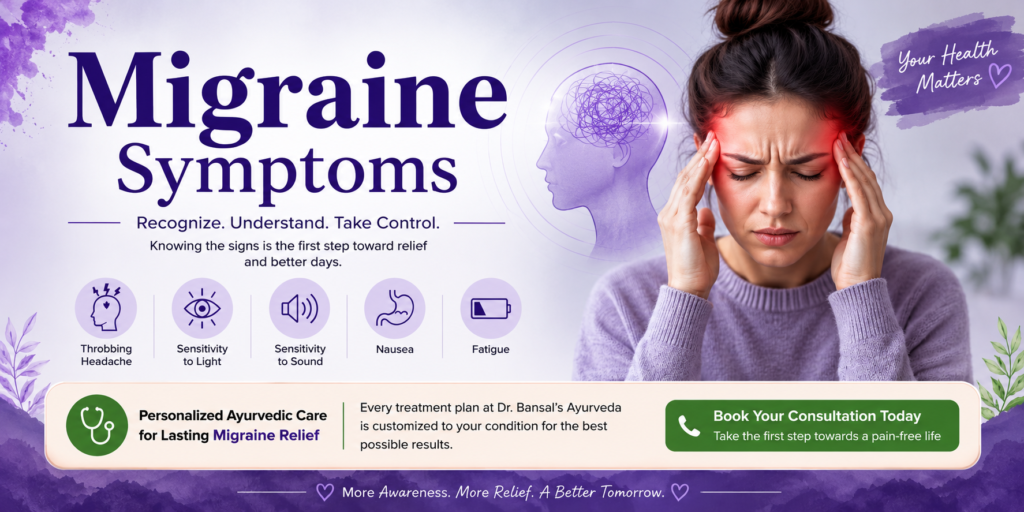
Recognizing migraine symptoms early can help you manage an episode before it worsens. The most common signs include:
- Throbbing or pulsating pain, usually on one side of the head
- Sensitivity to light and sound (photophobia and phonophobia)
- Nausea or vomiting
- Visual disturbances (aura) — flashing lights, zigzag lines, or blind spots before the headache begins
- Dizziness or light-headedness
- Fatigue and irritability, often a day before the actual attack (called the “prodrome” phase)
- Difficulty concentrating, sometimes described as “brain fog”
Not everyone experiences aura, but for those who do, it acts as an early warning sign that an attack is approaching.
What Causes Migraines?
Migraines don’t have one single cause — they’re usually triggered by a combination of factors, including:
- Hormonal changes (common in women during menstrual cycles)
- Stress and anxiety
- Lack of sleep or irregular sleep patterns
- Certain foods (aged cheese, caffeine, processed foods, alcohol)
- Bright lights, strong smells, or loud noises
- Weather changes
- Skipping meals or dehydration
From an Ayurvedic perspective, migraines are often linked to an aggravation of Pitta dosha, which governs heat and metabolic processes in the body. When Pitta becomes imbalanced — due to stress, poor digestion, or excessive heat-generating foods — it can disturb the nervous system and trigger head pain.
Migraine vs. Normal Headache: Key Differences
This is where most people get confused. Here’s a simple comparison:
Feature | Normal Headache | Migraine |
Pain type | Dull, constant pressure | Throbbing, pulsating |
Location | Both sides of head | Often one-sided |
Duration | A few hours | 4 hours to 3 days |
Other symptoms | Rare | Nausea, light/sound sensitivity, aura |
Impact on daily activity | Mild | Often disabling |
Trigger-based pattern | Less predictable | Often linked to specific triggers |
If your headache regularly comes with nausea, visual disturbances, or forces you to lie down in a dark room, it’s likely a migraine rather than a tension headache.
How Ayurveda Approaches Migraine Relief
Rather than only masking the pain, Ayurvedic treatment focuses on balancing the doshas (especially Pitta) and strengthening the nervous system for long-term relief. Common approaches include:
- Dietary adjustments — reducing spicy, oily, and fermented foods that aggravate Pitta
- Herbal support — herbs like Brahmi, Shankhpushpi, and Jatamansi are traditionally used to calm the nervous system
- Nasya therapy — administering medicated oils through the nostrils, believed to relieve pressure and tension in the head
- Shirodhara — a continuous stream of warm herbal oil poured over the forehead, known for its calming effect on the mind and nervous system
- Lifestyle routine (Dinacharya) — consistent sleep-wake cycles, meal timings, and stress management practices like yoga and pranayama
Many people find that combining conventional care with Ayurvedic support helps reduce the frequency and intensity of migraine episodes over time, especially when lifestyle and trigger management are part of the plan.
When to See a Doctor
While occasional migraines can often be managed with rest and lifestyle changes, you should consult a healthcare professional if:
- Migraines occur more than 4 times a month
- Pain is sudden and severe (“worst headache of your life”)
- You experience numbness, confusion, or slurred speech
- Symptoms change or worsen significantly
- Over-the-counter medication no longer helps
A doctor or Ayurvedic practitioner can help identify your specific triggers and recommend a personalized treatment plan.
Frequently Asked Questions
Q1: What are the earliest warning signs of a migraine? A: Early signs often include fatigue, mood changes, neck stiffness, and food cravings — occurring hours or even a day before the actual headache (the prodrome phase).
Q2: Can migraines happen without a headache? A: Yes, this is called a “silent migraine.” It can include aura, nausea, or dizziness without the typical head pain.
Q3: Is migraine a lifelong condition? A: For many people, migraines can be significantly managed or reduced through trigger identification, lifestyle changes, and Ayurvedic or medical treatment, even if the underlying tendency remains.
Q4: Can stress alone cause a migraine? A: Stress is one of the most common triggers, but it usually combines with other factors like poor sleep, dehydration, or Pitta imbalance to trigger a full episode.
Q5: Does Ayurveda offer a permanent cure for migraines? A: Ayurveda focuses on balancing the body and reducing recurrence through root-cause treatment, but results vary by individual, and consistency with diet, herbs, and routine is key.