
What Causes Kidney Stones? Common Causes, Risk Factors & Prevention Tips
In my years of Ayurvedic practice, kidney stones — known as Ashmari in classical texts — are among the most common complaints I see walk through the door. Patients often arrive doubled over in pain, surprised that something as small as a stone could cause such agony. Understanding why stones form in the first place is the first step toward preventing them, and Ayurveda offers a time-tested lens for looking at this problem alongside modern medical understanding.
What Are Kidney Stones, Really?
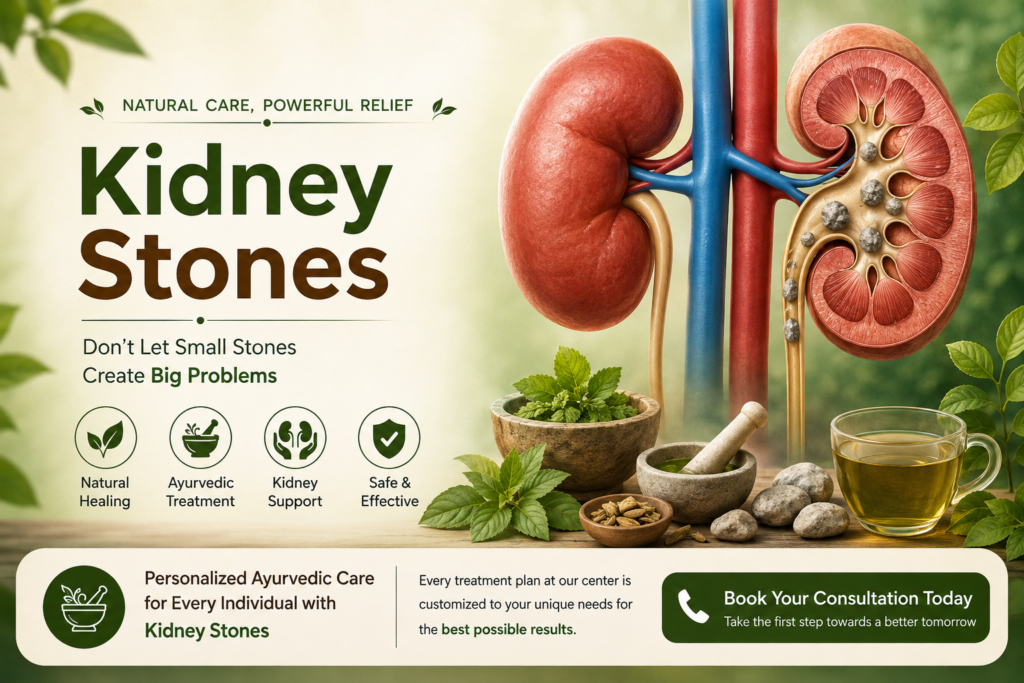
Kidney stones form when minerals and salts in urine — calcium, oxalate, uric acid, or phosphate — crystallize and clump together instead of flushing out of the body. In Ayurvedic terms, this happens when Kapha and Vata doshas become imbalanced, disturbing Mutravaha Srotas (the urinary channels) and allowing Ama (undigested toxic residue) to accumulate and harden into stone-like masses. Modern science and Ayurveda agree on one central point: stagnation and poor elimination are at the root of stone formation.
Common Causes of Kidney Stones
- Inadequate water intake. This is, by far, the most common cause I see. When you don’t drink enough water, urine becomes concentrated, giving minerals more opportunity to crystallize. Ayurveda has always emphasized adequate hydration, ideally warm water, to keep the urinary channels clear and moving.
- Poor dietary habits. A diet high in oxalate-rich foods (spinach, beetroot, nuts, chocolate), excess salt, or excessive animal protein increases the mineral load your kidneys must filter. In Ayurvedic thinking, heavy, sour, and salty foods aggravate Kapha and Pitta, creating the internal environment where stones take shape.
- Sedentary lifestyle. A body that doesn’t move enough slows Agni (digestive fire) and circulation, both of which are essential for proper elimination of waste and toxins.
- Genetic and metabolic factors. Some people are simply more prone to stone formation due to family history, metabolic conditions, or disorders like hyperparathyroidism and gout.
- Suppression of natural urges. Ayurveda specifically warns against habitually holding urine (Vega Dharana). Doing so regularly disturbs Vata dosha and directly contributes to stone and urinary tract issues over time.
- Underlying health conditions. Obesity, digestive disorders, chronic urinary tract infections, and certain medications can all increase your risk.
Risk Factors to Watch For(H2)
- Family history of kidney stones
- Chronic dehydration or living in a hot, dry climate
- Obesity or a high-protein, high-sodium diet
- Digestive weakness or a Kapha-Pitta constitution prone to accumulation
- Sedentary work and irregular routines (Vishama Charya)
- Excessive intake of tea, coffee, or processed foods
Risk Factors to Watch For
- Family history of kidney stones
- Chronic dehydration or living in a hot, dry climate
- Obesity or a high-protein, high-sodium diet
- Digestive weakness or a Kapha-Pitta constitution prone to accumulation
- Sedentary work and irregular routines (Vishama Charya)
- Excessive intake of tea, coffee, or processed foods
Ayurvedic Approach to Prevention
Prevention in Ayurveda centers on restoring balance to the doshas, strengthening digestion, and keeping the urinary channels clear.
Stay well hydrated with the right fluids.
Warm water throughout the day, and traditional preparations like barley water or coconut water, help flush the urinary tract naturally.
Favor a Kapha-Pitta pacifying diet.
Reduce oxalate-heavy, salty, and fried foods. Include more fresh vegetables, whole grains, and moderate amounts of dairy, and season food with digestion-supportive spices like cumin, coriander, and fennel.
Herbs traditionally used for urinary health.
Ayurvedic practitioners often reach for herbs such as Pashanabheda (literally “stone breaker”), Gokshura, Varuna, Punarnava, and Chandraprabha Vati to support healthy urinary flow and discourage crystal formation. These are typically used as part of a broader, personalized treatment plan rather than as standalone remedies, and should only be taken under the guidance of a qualified Ayurvedic practitioner, since the right formulation and approach depends on your dosha constitution, the type of stone, and your overall health.
Move your body daily.
Regular walking or yoga supports circulation and digestion, both of which help prevent the stagnation that leads to stone formation.
Don't suppress natural urges.
Respond to the urge to urinate promptly rather than holding it in.
Manage stress and sleep well.
Chronic stress disturbs Vata and indirectly affects digestive and urinary health, so a calming daily routine (Dinacharya) is part of long-term prevention.
When to See a Doctor
Ayurvedic care works well for prevention and for managing smaller stones, but severe pain, fever, blood in urine, or a stone that isn’t passing on its own needs prompt medical evaluation. Ayurveda and modern medicine can work together — many practitioners today collaborate with urologists to give patients the safest, most complete care.
Frequently Asked Questions
Q1: Can Ayurvedic herbs dissolve kidney stones completely?
Certain herbs traditionally support smaller stones passing more comfortably and help discourage new stone formation, but effectiveness depends on stone size, composition, and your individual constitution. Larger or obstructive stones often still need conventional medical intervention.
Q2: How much water should I drink to prevent kidney stones?
Ayurveda recommends staying consistently hydrated throughout the day, favoring warm water, rather than drinking large amounts infrequently. A qualified practitioner or doctor can help you determine what’s right for your body and climate.
Q3: Are all kidney stones caused by the same thing?
No. Stones can be calcium oxalate, uric acid, struvite, or cystine based, and each has different contributing factors. This is why proper diagnosis matters before starting any treatment, Ayurvedic or otherwise.
Q4: Is a high-calcium diet bad for kidney stones?
Not necessarily — adequate dietary calcium can actually help bind oxalate in the gut before it reaches the kidneys. Restricting calcium too aggressively can sometimes make things worse, so any dietary changes are best made with professional guidance.
Q5: Can stress really contribute to kidney stones?
Ayurveda views chronic stress as a Vata-aggravating factor that can disturb digestion and elimination over time, indirectly supporting the conditions in which stones form.
Q6: Should I combine Ayurvedic treatment with my doctor’s advice?
Yes. For anyone with a diagnosed kidney stone, it’s best to consult both a qualified Ayurvedic practitioner and a physician so that herbal support and conventional treatment complement each other safely.
This article is intended for general awareness and does not replace personalized medical or Ayurvedic consultation. Please consult a qualified practitioner before starting any herbal treatment.